
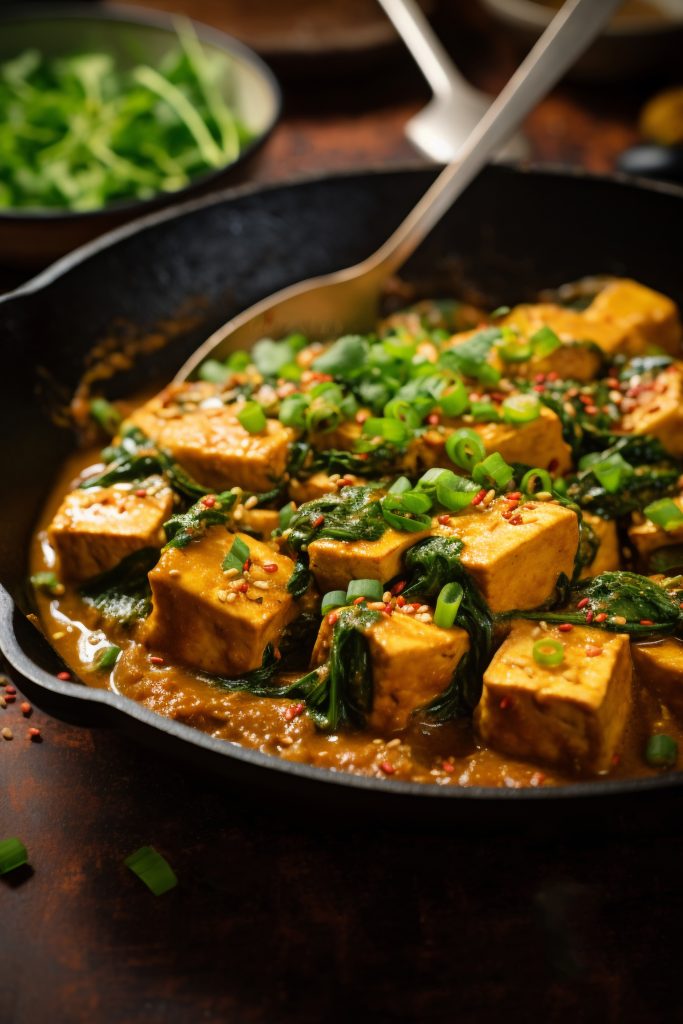
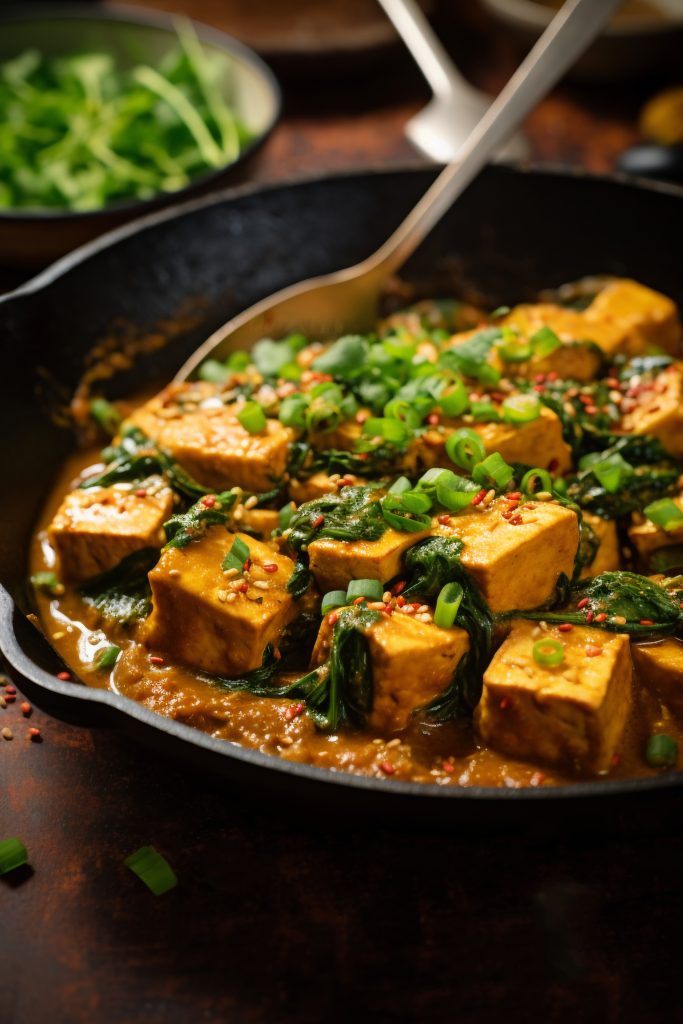
Mapo tofu (麻婆豆腐) is a traditional Sichuan Cuisine dish (from China’s Sichuan province), known for its spicy and numbing flavors.
The name “mapo” roughly translates to “pockmarked old woman”— “Ma” stands for “ma-zi” (麻子) which means pockmarks and “po” comes from “popo” (婆婆) which means an old woman or grandma. This refers to the legendary chef who created the dish.
The dish traditionally features silken tofu and beef, cooked in a spicy sauce made with doubanjiang (fermented chili bean paste) and douchi (fermented black beans). The dish’s signature is its balance of spice, umami, and tingling heat that embodies the essence of Sichuan cooking.
Today, you can find mapo tofu in almost any Chinese restaurant worldwide, with different variations.
Origins of Mapo Tofu
Mapo tofu’s story begins in Chengdu, the capital of China’s Sichuan province, during the Qing Dynasty (1644–1912). The dish is said to have been created by an old woman named Chen Po, known for her pockmarked face (a feature that defined her nickname). She ran a small restaurant that catered to laborers and travelers, serving them her signature tofu dish, seasoned with fiery spices and affordable meat.
Her tofu was so good that, over time, her recipe gained fame, and “mapo tofu” (the pockmarked old woman’s tofu) became a staple of Sichuan cuisine.
Characteristics of Mapo Tofu: What Does It Taste Like?
Mapo tofu is a complex dish renowned for its spicy heat and the distinctive málà sensation—a combination of fiery spiciness and numbing tingling from Sichuan cuisine.
We can perfectly describe its flavor and texture using the following Chinese adjectives:
- Má (麻): Numbing, from Sichuan peppercorns.
- Là (辣): Spicy hot, from chili bean paste and chili oil.
- Tàng (烫): Hot, served freshly cooked.
- Xiān (鲜): Fresh, with savory umami from fermented ingredients.
- Nèn (嫩): Tender and soft, particularly the silken tofu.
- Xiāng (香): Aromatic, from garlic, ginger, and green onions.
- Sū (酥): Slightly flaky, from stir-fried spices and ingredients.
The unique taste of mapo tofu results from a combination of these ingredients:
Essential Ingredients
- Pixian Doubanjiang (郫县豆瓣酱): A chili broad bean paste from Sichuan that provides a salty, spicy, and umami-rich base.
- Fermented Black Beans: Add depth and a savory kick.
- Chili Oil & Flakes: Deliver the characteristic heat and vibrant red color.
- Sichuan Peppercorns: Create the numbing, tingling sensation of málà (see above).
- **Aromatics (Garlic, Ginger, Green Onions): **Infuse the dish with bold fragrance.
- Rice Wine: Balances the flavors and enhances aroma.
Supplementary Ingredients
- Water or Stock: Adds body and helps combine flavors.
- Sugar: Balances saltiness from the bean paste, though the dish doesn’t taste sweet.
- Cornstarch: Thickens the sauce.
We can say that mapo tofu delivers a blend of spicy, numbing, salty, and umami flavors. Although a small amount of sugar is used, it doesn’t taste sweet. Instead, the dish offers a balanced flavor with tender tofu and an aromatic, silky sauce.
Variations of Mapo Tofu
Without a doubt, mapo tofu’s original recipe is iconic; however, there are also many regional and international variations:
- Japanese Mapo Tofu: A milder version (usually, sweetened slightly) featuring ingredients like miso paste instead of doubanjiang.
- Vegetarian/Vegan Mapo Tofu: Made with tofu and mushrooms or plant-based ground meat, using vegetable broth to keep the dish animal-free.
- Seafood Mapo Tofu: Incorporates shrimp or scallops, which offers a lighter, ocean-inspired twist.
- Fusion Mapo Tofu: Modern takes might include incorporating cheese, noodles, or even serving it as a pizza topping!
- Regional Chinese Variations: Some versions use a heavier dose of Sichuan peppercorns for an extra numbing sensation, while others add more vegetables like leeks or bell peppers.
Health and Nutrition Features of Mapo Tofu
Mapo tofu can be a nutritious addition to your diet, as its ingredients offer various health benefits when consumed as part of a balanced meal:
Protein
- Tofu: The primary ingredient, tofu, is a plant-based protein powerhouse. It contains all nine essential amino acids, making it a complete protein. It’s also low in calories and free of cholesterol.
- Meat (Optional): Ground pork or beef adds additional protein and essential nutrients like iron and vitamin B12. (Choose lean cuts to reduce saturated fat content).
Nutrients
- Tofu: It is a great source of calcium and iron, supporting bone health and oxygen transport in the blood.
- Garlic and Ginger: Both are rich in antioxidants and have anti-inflammatory properties, supporting immune and digestive health.
- Sichuan Peppercorns: These provide a small dose of vitamins and minerals and aid digestion and circulation.
Low in Carbs and Gluten-Free
Mapo tofu itself is naturally low in carbohydrates (especially if made without added sugar). Using tamari or gluten-free soy sauce can also make this dish suitable for gluten-free diets.
Lower in Calories
Mapo tofu is an excellent choice for people watching calorie intake—The rich flavors of doubanjiang, chili oil, and douchi pack a punch without the need for heavy fats or sugars.
5 Tips for a Healthier Mapo Tofu
- Substitute meat with ground turkey, chicken, or plant-based alternatives for a lower-fat option.
- Doubanjiang and soy sauce can be high in sodium, so use low-sodium soy sauce or reduce the amount used and adjust with spices.
- Add diced bell peppers, mushrooms, or leafy greens to boost fiber and vitamins.
- Sichuan cuisine often uses generous oil. You can reduce the amount of chili oil to make it lighter.
- Swap white rice for brown rice or quinoa for added fiber and nutrients.
A Bold Taste of Sichuan Cuisine
Now you know what mapo tofu is and why it is such a popular dish. We’d like to invite you to** visit The Orient** and savor the authentic, mouthwatering flavors of this Sichuan classic—one that is, as the Chinese saying goes, ‘色香味俱全’ (sè xiāng wèi jù quán), ‘a feast for the eyes, aroma, and taste.’
Published on November 27, 2024
All stories